This is our Jazz October 2026 selection, featuring amazing names and favorite artists who are currently capturing most of our attention. From transcendent acoustic collaborations to bold avant-garde expressions, here are eight amazing — we deeply believe —new jazz releases.
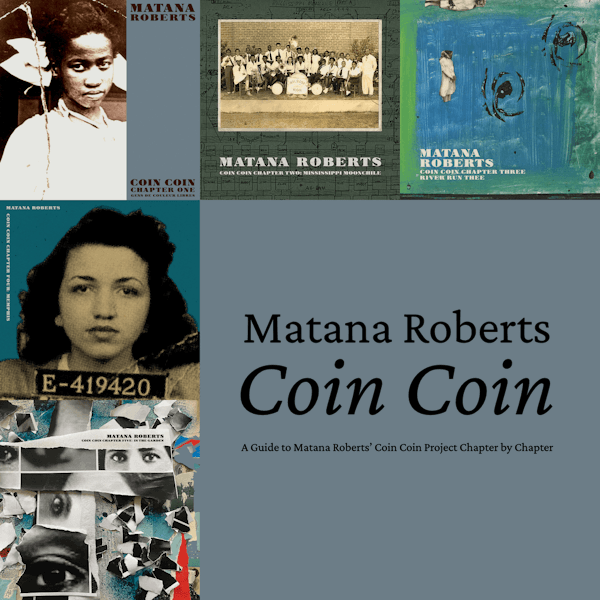
Jazz rarely brings tears to one’s eyes, but here is an exception. The Coin Coin project expresses the most dramatic human emotions ever heard on jazz albums. It reminds us of what should never have been, what should no longer exist, and that humanity should be one.
So, if one of humanity’s tragedies is its inability to recognize itself and to understand that the other is oneself, then the Coin Coin project brings this tragedy to life deep within us, making it–through illumination mainly–accessible essentially.
September brings us properly back into the season, just in time with our selection (ouf!), and with it comes an impressive flow of new music. Our Jazz September 2026 selection moves from new names—at least for us—to some true legends. Ten albums, each with a strong identity of its own, and plenty of reasons to keep listening as autumn begins.
As the summer went by, the June 2026 new jazz selection has to become the new jazz selection for June, July, and August 2026. And although I am sorry for the delay, it somehow helped me make a heartfelt selection for two main reasons I would like to share.
First, for the first time in years, I have spent more time listening to my record collection than forthcoming releases. I listened to some albums I was wondering whether to discard — as it helps me keep a tight collection — but mostly to all my favorites, from 1959 to 2025. It made my summer such a wonderful, laid-back moment, filled with music I love. So I must admit that, while I know I am running this blog primarily to help discover the next albums that will be part of my/your best-ever list, the rush of trying to achieve it makes me miss a key goal: enjoying the ones I already have. I will definitely reclaim this goal, as it helps keep the outcome alive (listening to outstanding music we want to return to) and sets the bar.
The “Golden Age of Jazz” usually refers to the Swing Era of the 1930s and 1940s, when jazz became America’s most popular music and big bands filled dance halls across the country, leading up to the transition to early bebop. While the expression itself remains open to debate, this period still stands as one of the defining moments in jazz history.
It was a time when jazz moved from clubs and local scenes to radio stations, concert halls, ballrooms, and eventually into everyday American culture. The rise of legendary bandleaders, iconic soloists, and unforgettable vocalists helped shape the future of jazz and the sound of popular music as a whole.
The Golden Age of Jazz is commonly associated with the Swing Era, just following the “Jazz Age“. During these decades, jazz became the dominant form of popular music in the United States, reaching an audience far beyond the clubs and local scenes where it had originally developed.
At the center of this era stood the big bands. Large ensembles led by figures such as Duke Ellington, Count Basie, and Benny Goodman filled dance halls across the country with energetic arrangements, strong rhythms, and memorable melodies. Swing music became deeply connected to social life, radio broadcasting, and popular entertainment, helping jazz establish itself as a central part of American culture.
This period also marked the rise of many of the musicians and vocalists who would become permanent references in jazz history. Artists such as Louis Armstrong, Billie Holiday, and Ella Fitzgerald defined the sound and identity of the era through recordings that continue to influence musicians today.
Musically, the Golden Age of Jazz was characterized by swing rhythms, arranged compositions for larger ensembles, and a growing balance between orchestration and improvisation. At the same time, the period was far from static. Toward the mid-1940s, younger musicians began pushing jazz in more experimental directions, leading to the emergence of bebop through artists like Charlie Parker and Dizzy Gillespie.
Although the expression “Golden Age” can suggest that jazz reached its peak during these years, the reality is more complex. Jazz continued to evolve dramatically in the decades that followed. Still, the Swing Era remains one of the most influential and widely celebrated periods in the history of the music.
II – Essential Musicians & Bandleaders of the Golden Age of Jazz
The following musicians remain some of the essential figures of the Golden Age of Jazz.
Louis Armstrong, known as “Satchmo.”
Known as “Satchmo” or “Pops,” Louis Armstrong was one of the foundational figures of jazz. As both a trumpeter and vocalist, Armstrong transformed the role of the soloist in jazz through his rhythmic freedom, melodic inventiveness, and unmistakable tone. His charismatic presence and accessible style also helped bring jazz to a much broader audience.
Armstrong introduced a new sense of swing and spontaneity that would influence generations of musicians. Recordings such as West End Blues and Potato Head Blues remain landmarks in the history of jazz.
Edward KennedyEllington, known as “Duke Ellington.”
As a composer, pianist, and bandleader, Duke Ellington became one of the most important artistic voices of the Swing Era. His orchestra was not only one of the greatest big bands of its time, but also a platform for innovation and musical sophistication.
Ellington blurred the boundaries between jazz and orchestral music through refined arrangements and compositions that are now considered classics, including Take the “A” Train, Mood Indigo, and Sophisticated Lady. His music demonstrated that jazz could be both popular entertainment and ambitious art music.
William JamesBasie, known as “Count Basie.”
Count Basie became one of the defining figures of big band swing through his relaxed piano style and deeply rhythmic orchestra. His music emphasized groove and precision, creating one of the most swinging ensembles of the era.
The Count Basie Orchestra became famous for its tight arrangements, powerful rhythm section, and ability to balance simplicity with irresistible energy. Basie’s approach would influence countless big bands and rhythm sections in the decades that followed.
Benny Goodman, known as the “King of Swing.”
Often referred to as the “King of Swing,” Benny Goodman helped bring jazz into mainstream American culture during the 1930s. His orchestra became one of the most popular big bands of the Swing Era, known for its precision, energy, and strong soloists.
Goodman also played an important social role in jazz history by leading one of the first racially integrated jazz groups during a period of segregation in the United States.
Charlie Parker, known as “Bird.”
Known as “Bird,” Charlie Parker revolutionized jazz during the 1940s through the development of bebop. His virtuosic alto saxophone playing, harmonic innovations, and rapid improvisations changed the direction of jazz almost overnight.
Parker pushed the music away from dance-oriented swing toward a more complex and exploratory form centered on improvisation. Recordings such as Confirmation, Ornithology, and Now’s the Time remain essential listening for understanding modern jazz.
Dizzy Gillespie, known as “the Ambassador of Jazz.”
Together with Charlie Parker, Dizzy Gillespie played a central role in the creation of bebop. His trumpet playing combined extraordinary virtuosity with rhythmic complexity and harmonic experimentation, helping redefine modern jazz in the 1940s.
Gillespie was also instrumental in introducing Afro-Cuban influences into jazz, expanding the music’s rhythmic vocabulary. His energetic personality and adventurous spirit made him one of the most recognizable and influential musicians of the era.
III – Essential Vocalists of the Golden Age of Jazz
Their voices remain deeply connected to the sound and spirit of the era.
Billie Holiday, known as “Lady Day.”
Billie Holiday remains one of the most emotionally powerful vocalists in jazz history. Rather than relying on technical virtuosity alone, Holiday transformed songs through phrasing, timing, and an extraordinary ability to convey vulnerability and depth.
Her interpretations often carried a sense of intimacy and emotional tension that changed the relationship between singer and song. Recordings such as Strange Fruit, God Bless the Child, and Lover Man remain among the most important vocal performances in jazz.
Ella Fitzgerald, known as “the First Lady of Song.”
Ella Fitzgerald became celebrated for her remarkable vocal range, precision, and effortless sense of swing. Her mastery of scat singing and her ability to navigate complex melodies made her one of the most technically accomplished vocalists of the era.
Fitzgerald moved with ease between swing, bebop, and ballads, leaving behind an immense discography that includes A-Tisket, A-Tasket, Summertime, and her legendary Songbook recordings.
Nathaniel Adams Coles, known as “Nat ‘King’ Cole.”
Before becoming an international pop star, Nat King Cole first established himself as an exceptional jazz pianist and vocalist. His warm, elegant voice and refined phrasing made him one of the defining vocalists of the period.
Cole brought a sense of calm sophistication to jazz singing, helping bridge the worlds of jazz and popular music. Recordings such as Unforgettable, Route 66, and Mona Lisa remain timeless classics.
Frank Sinatra, known as “Ol’ Blue Eyes.”
Although often associated with traditional pop and the Great American Songbook, Frank Sinatra was deeply influenced by jazz phrasing and swing. His sense of timing, breath control, and conversational approach to singing helped redefine popular vocal performance during the mid-20th century.
Sinatra’s collaborations with arrangers and orchestras, including the Count Basie Orchestra, connected him directly to the jazz tradition. Through recordings such as Fly Me to the Moon, I’ve Got You Under My Skin, and In the Wee Small Hours, Sinatra became one of the most enduring voices of the era and one of the greatest interpreters of American song.
Why the Golden Age of Jazz Still Matters
The Golden Age of Jazz remains one of the most important periods in the history of music, not only for its cultural impact but also for the recordings it produced. The musicians and vocalists of this era helped shape the language of jazz through swing, improvisation, composition, and interpretation, creating foundations that still influence artists today.
Of course, jazz did not stop evolving after the Swing Era. Bebop, cool jazz, modal jazz, free jazz, fusion, and contemporary jazz would all push the music into new territories. But the Golden Age remains a unique moment when jazz stood at the very center of popular culture while simultaneously developing into an increasingly ambitious art form.
Where should you begin your next jazz discovery? May delivered a remarkable collection of albums, each proposing its own way of listening. Whether through reinvention, collective exploration, fragmented memories, or deeply human forms of connection, these records remind us that jazz remains one of the most fertile spaces for imagination and surprise.
Here is our New Jazz Releases selection for May 2026, featuring albums genuinely worth your listening time, presented in order of their release dates.
Shards is an album by pianist Jason Moran, electronic musician and tape-loop artist BlankFor.ms, and drummer Marcus Gilmore. Released on May 1, 2026, via Red Hook Records, the album was recorded on October 19–20, 2024, at The Bridge Studio in Brooklyn, New York, by engineers Amon Drum and Greg Tock.
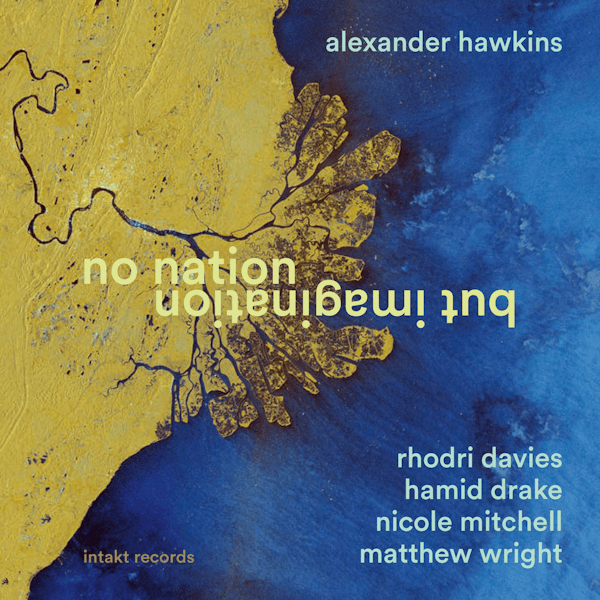
No Nation but Imagination is an album by British pianist and composer Alexander Hawkins, recorded with a quintet featuring Rhodri Davies on harp, Hamid Drake on drums, Nicole Mitchell on flute, and Matthew Wright on turntables and live sampling. Released May 22, 2026, as Intakt Recording #453, the album was recorded on February 3, 2025, at Fish Factory Studios in London by Ben Lamdin, with additional material recorded live at Café OTO on February 2, 2025, by Billy Steiger.
Keith Jarrett is clearly a monument, a cornerstone in jazz. If you have been following him for a while, every new release tends to feel a bit like a gift. Even when it is another full concert of untitled tracks that looks, at first, slightly intimidating, you press play, and very quickly, something happens.
But coming to his music for the first time is something else entirely. It is vast, and it is not always obvious where to begin. Solo concerts, standards, quartets, classical recordings… it can feel like standing in front of something you are not quite sure how to approach.
So the question is simple: where do you start?
I – Start with the obvious… or not?
The Köln Concert is the obvious place to begin. It is the record everyone points to, the one that seems to stand above the rest, the one that, even outside of jazz, has reached something close to iconic status.
And for good reason. There is something immediate about it. The opening notes, simple and almost fragile, pull you in without effort. The music builds slowly, patiently, repeating, expanding, finding its way forward in real time. You don’t need to “understand” anything to stay with it. It just works.
Keith Jarrett
The Köln Concert (ECM Records, 1975)
So yes, you can start here.
But at the same time, it might not be the easiest introduction to Keith Jarrett. Because what you hear on The Köln Concert is a very specific side of his music: a long, fully improvised solo performance, without interruption, without titles, without clear landmarks. It asks for time, for attention, and maybe for a certain kind of mood. If you are not used to that format, it can feel a bit disorienting.
“Since it is all improvised, every second may contain a hundred choices for me. It’s a course of thought and thought, decision and no decision.” — Keith Jarrett
And yet, that is also exactly what makes it so compelling. So maybe the right way to approach it is not as the starting point but as a possible entry point. If it clicks, it can open the door to everything else. If it doesn’t—at least not yet—that is perfectly fine. There are other ways in.
What you hear on The Köln Concert is just one moment within a much larger body of solo recordings. Over the years, Keith Jarrett has developed this format extensively, across decades of live performances. If you would like to go further, we have explored this period in more detail here: Keith Jarrett – Piano Solo (1972–1998) and Keith Jarrett – Piano Solo (1998–2017).
II – Start with something familiar: the Standards Trio
If The Köln Concert feels a bit too open, too unstructured, then the Standards Trio is probably the most natural way into Keith Jarrett’s music.
Formed with Gary Peacock on bass and Jack DeJohnette on drums, this trio does something very simple on paper: they play standards. Songs you may already know, or at least forms that feel familiar: clear themes, recognizable structures, a sense of grounding that makes it easier to follow what is happening.
Keith Jarrett, Gary Peacock, Jack DeJohnette
Standards, Vol. 1 (ECM Records, 1983)
What makes these recordings so compelling is the balance between structure and freedom. The melody is there, the harmony is there, but within that framework, everything is alive. The trio listens, reacts, stretches time, and subtly reshapes the material.
It also gives you a different perspective on Jarrett as a pianist. You hear how he interacts, how he leaves space, how he pushes and pulls the music forward with the others.
If you are looking for a clear entry point, Standards, Vol. 1, is the perfect place to begin. You don’t need to overthink it; the familiarity of the material will do the rest, and from there, you can start to hear what makes this trio so special.
Accessible, grounded, great first step
III – Start with space and lyricism: the European Quartet
Another way into Keith Jarrett’s music is through what is often called his European Quartet.
With Jan Garbarek on saxophone, Palle Danielsson on bass, and Jon Christensen on drums, the sound is immediately distinctive. Lighter, more transparent. The compositions are clearly defined, often lyrical, sometimes almost meditative, but always leaving room for the music to expand and move in unexpected directions.
Jan Garbarek, Keith Jarrett, Palle Danielsson, Jon Christensen
Belonging (ECM Records, 1974)
It is also a different kind of listening experience. Less about following a structure you already know, less about being carried by a single improvisation, and more about letting the music come to you.
“You know, when people look at a tree, they look at the leaves; they don’t look at the spaces between the leaves. They’re focused on the tree. I think there’s an awareness of spaces or it wouldn’t look like a tree to them.” –Keith Jarrett
Belonging is probably the best place to start here: strong themes, open spaces, and a sense of quiet intensity that runs throughout the record.
If you are drawn to something more atmospheric, more reflective, this might be your way in.
IV – Start with intensity: the American Quartet
If what you are looking for is something more direct, more physical, then the American Quartet is another way into Keith Jarrett, and a very different one.
With Dewey Redman on tenor saxophone, Charlie Haden on bass, and Paul Motian on drums, the music moves with a kind of urgency that you don’t really hear in the European Quartet. It is denser, more grounded, sometimes rougher around the edges. And at times, it can feel almost overwhelming.
Keith Jarrett
The Survivors’ Suite (ECM Records, 1977)
The compositions are often more extended, more layered, blending written themes with open sections that can suddenly take off. It also reveals another side of Jarrett. Less lyrical, less “floating,” and more anchored in something earthy, almost raw. The energy comes as much from the group as from the piano.
The Survivors’ Suite is a great entry point here. If it clicks, it opens up a whole different dimension of his music. This might not be the easiest place to start, but for some listeners, it is the one that makes the strongest impression right away.
V – Another path: Jarrett as a classical pianist
It is easy to forget, but part of Keith Jarrett’s discography has nothing to do with jazz.
Alongside his improvised concerts and his work in trios or quartets, Jarrett has also recorded a significant number of classical pieces by Bach, Mozart, and Shostakovich, among others. And he approaches them with the same level of attention and commitment.
J. S. Bach, Keith Jarrett
The Well-Tempered Clavier Book I (ECM Records)
There is no improvisation here, no stretching of form, no interaction with other musicians. The music is written, and demands a different focus. What remains is touch, phrasing, and a very direct relationship to the score.
“If I’m not a jazz player all the time, I’ve at least been cued in to what I do by jazz.” –Keith Jarrett
It might not be the most obvious place to start. And if you are coming to Jarrett through jazz, it can even feel a bit surprising at first.
But for some listeners, it can also be a very natural entry point. Especially if you are already familiar with classical music, or simply curious to hear another side of his playing, more inward, but just as distinctive.
VI – One Last Way In: Keith Jarrett as a sideman
Before becoming the towering figure many listeners associate with solo concerts and long improvisations, Keith Jarrett also appeared as a sideman on several major recordings.
And in some ways, this can be one of the easiest ways to approach his playing.
Because within another musician’s framework, Jarrett reveals different sides of himself. Sometimes more direct, sometimes more restrained, and even in a supporting role, his phrasing, his touch, and his sense of movement through the music stand out almost immediately.
Miles Davis
Live-Evil (Columbia)
His work with Miles Davis remains one of the most fascinating entry points. Albums like Live-Evil or The Cellar Door Sessions have Jarrett in a completely different environment: electric, dense, unpredictable, and far removed from the lyrical solo piano recordings many listeners first associate with him.
But there are many other paths as well, whether with Charles Lloyd, whose quartet helped bring Jarrett to wider attention in the late 1960s, or through various collaborations across his early career.
It is another reminder that there is no single version of Keith Jarrett. And sometimes, hearing him through someone else’s music can be the perfect place to begin.
So, where should you start?
In the end, there might not be a single right way to start with Keith Jarrett.
That is probably what makes his music both so fascinating and, at first, a little difficult to approach. Each path leads somewhere different. A solo concert won’t give you the same experience as the trio. The European Quartet doesn’t sound like the American one. And even within each of these, the music keeps evolving.
So rather than trying to find the perfect starting point, it might be better to simply choose one that feels right to you. Something familiar, something more open, something more intense, whatever draws you in.
Because with Jarrett, what matters is not so much where you begin, but how you listen. Taking the time to stay with the music, to come back to it. Some recordings will connect immediately. Others might take longer. And some may only make sense later. That is part of it.
So pick a starting point, press play, and see where it takes you. And if you already have one, an album you keep returning to, or the one that first made it all click, feel free to share it.
Jazz is often approached through its genres, each of which describes a particular sound, style, or way of playing. But these styles did not appear in isolation. They emerged over time, shaped by musicians, places, and contexts that continuously redefined what jazz could be.
Looking at jazz through its periods offers a different perspective. Instead of focusing only on how the music sounds, it helps us understand when and why it sounds that way. From its early development in New Orleans at the beginning of the 20th century to its current global and hybrid forms, jazz has evolved through a series of phases, each marked by distinct musical ideas and cultural shifts.